Can one of the worst cars ever made become one of the best cars ever made?
Lucky Strike
AUSTIN ALLEGRO



Can one of the worst cars ever made become one of the best cars ever made?

Make a truly stunning car based on the humble Austin Allegro. The hot hatch it never was.
The car must be a genuinely top-notch driving experience and the excecution on a par with the best cars out there!

Base the car around known performance underpinnings from a Honda Integra DC2 Type R.
Structurally bonded Carbon body panels created from a full exterior CAD model provide a wide stance, light weight and extreme stiffness.
The interior is a scratch-design that creates an unmistakable 70s vibe while introducing high quality materials throughout – Billet aluminium, Nappa leather and Harris tweed.
Modern electronics and motorsport spec wiring bring reliability and functionality.


Few British cars have been as maligned or derided as the humble Austin Allegro. Intended as British Leyland’s bold step toward establishing itself as one of Europe’s premier mass-market manufacturers, the Allegro combined a radical front-wheel-drive layout with Alex Moulton’s innovative Hydragas suspension system, all wrapped in controversially styled bodywork. It was tasked with recapturing the fleet market from Ford while simultaneously pushing BL upmarket.
That it ultimately failed to achieve either objective is well documented, and the Allegro’s place in automotive history has since become infamous.
For many, the Allegro became shorthand for the British mass-market car industry’s 1970s nadir: a symbol of industrial unrest, ill-fated corporate politics, penny-pinching, questionable styling decisions, and inconsistent build quality.

But, much as it may pain some to admit, the 1970s were a long time ago—so long, in fact, that in spring 2026 the Allegro celebrates its 53rd birthday. Time enough, perhaps, to reassess its place in British automotive history and even, whisper it, consider a degree of rehabilitation.
With that in mind, we at Retropower set out to create Project Lucky Strike.
The first of a pair of near-identical cars built for two car-mad brothers, Project Lucky Strike was our attempt to transform the Allegro into something it never truly was during its nine-year production life: a hot hatch, with the power and poise to satisfy even the most demanding performance driver (and no, the Equipe special edition doesn’t count).
To achieve this, we undertook an exercise in automotive gene-splicing. The Allegro bodyshell was grafted onto the chassis of one of the most highly regarded front-wheel-drive performance cars of the modern era: the DC2 Honda Integra Type R.
This phase of the build prompted a degree of dismay from some corners of both the Integra and Allegro communities, which we can understand. However, we’d counter with the old adage about not making an omelette without breaking a few eggs – and we’ve got one heck of an omelette in the offing!

Progress proved encouraging, with the Allegro bodyshell accommodating the Integra chassis surprisingly well. Approximately 130mm of excess material was removed from the donor chassis to allow the body to be carefully lowered into position, having first been securely mounted to our Celette jig.
Of course, simply placing a bodyshell over a chassis does not a complete running restomod make. Significant engineering challenges remained, particularly around the A-posts, front bulkhead, and inner sills. These areas were resolved with the assistance of our Peel 3D scanning facility and in-house CAD team, George and Luke.

A good example of this approach was seen in the custom carbon fibre front and rear wings, produced to our specification by KS Composites. These were seamlessly integrated into the car and highlighted the value of 3D scanning and digital modelling within this and other Retropower projects. It’s undoubtedly one of the most potent tools in the our arsenal, and one we simply couldn’t do without nowadays.
Retaining much of the Honda DNA was central to the project’s goal of creating a truly engaging front-wheel-drive driver’s car, as was preserving what was arguably the Integra’s greatest asset: its B18C engine. Widely regarded as one of the finest naturally aspirated mass production engines ever made, it was uprated with internal enhancements and fitted with individual throttle bodies before being installed within the Allegro’s engine bay.

Both Project Lucky Strike builds are now nearing completion. With paintwork finished and assembly largely complete, the final stage awaits: a full shakedown and road test programme, once the British weather allows.
The result is two extensively re-engineered Austin Allegros, transformed beyond recognition. Beneath the familiar (albeit ‘swollen’) bodywork lies the running gear and heart of the Honda Integra Type R, including the highly developed B18C engine, replete in this instance with Jenvey throttle bodies.
Together, they deliver a characterful but genuinely capable driver’s package: sharp, responsive, and entirely redefined. What was once dismissed as an unremarkable family car – the butt of far too many awful automotive jokes – has been reborn as a focused, engaging performance machine that blends British design history with Japanese engineering precision.
In the end, Project Lucky Strike stands as one of our most unusual and satisfying undertakings: a true exercise in automotive reinvention and DNA ‘splicing.’


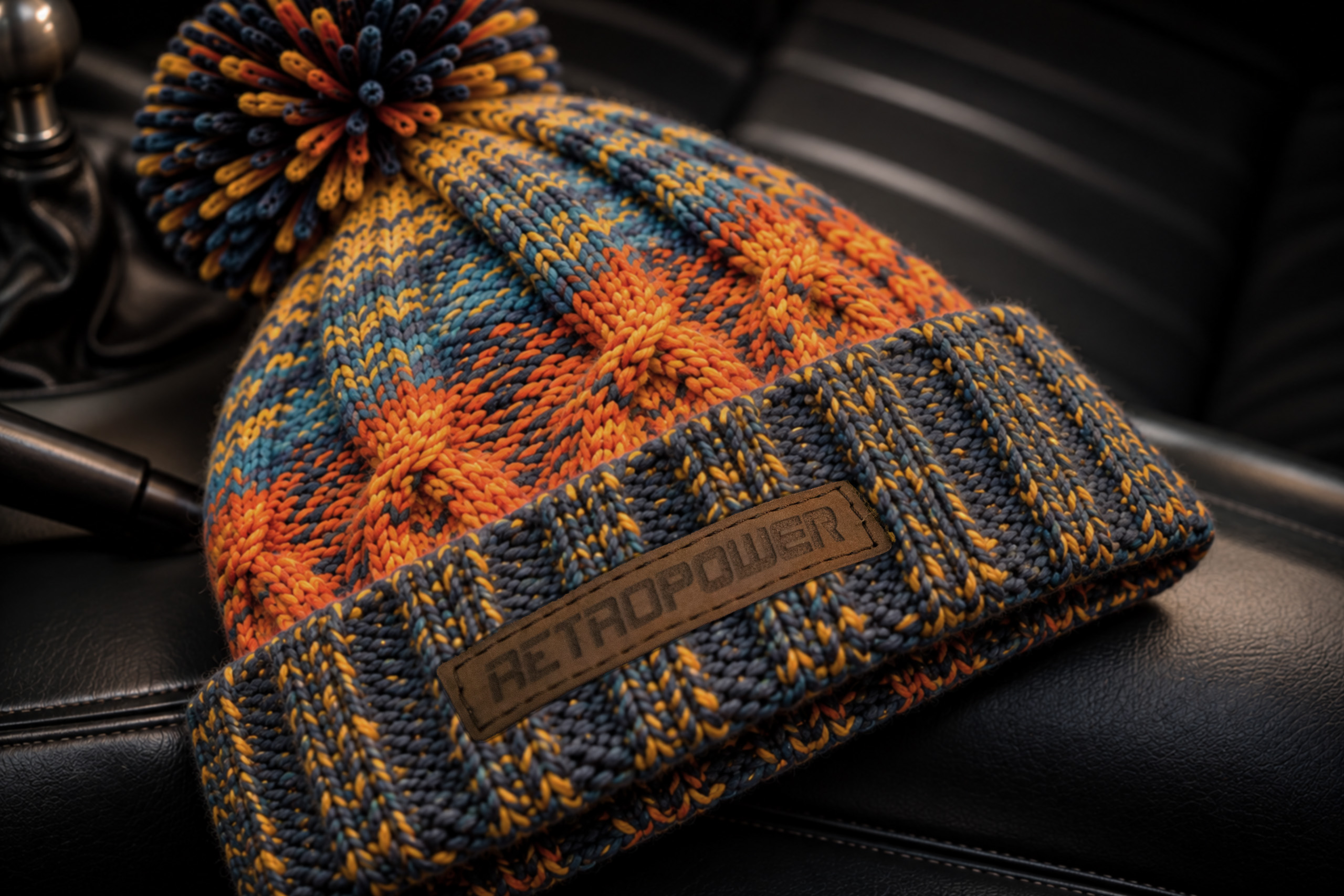
Bobble hats, Beanies, Heavyweight Hoodies & more!
 THINKING OF STARTING A PROJECT? HERE ARE THE NEXT STEPS...